
The Eugenia Chapter of the FNPS met on September 18 at the home of Patty and Scott Brower for its final yard tour of 2025. Despite lingering dark skies and the threat of another shower, the tour and native plant auction were deemed successful from the happy onlookers and winning auction bidders.
The Brower home serves as an excellent example of several of the practices we preach for establishing a native plant habitat. The fact that the yard is just about 2 years old helps to demonstrate important design concepts that will enable the property reach its full potential as the plants mature.
It is evident that the whole yard was designed with a specific plan. The Browers really bought in to the native plant landscape concept and decided to landscape their entire property all at the same time. If you have all the resources to do your entire yard at once, that is great. However, its just as rewarding to take a portion of an existing yard at a time and convert to native plants. The point is that you need to have a PLAN in place and choose the right plant for the right place!
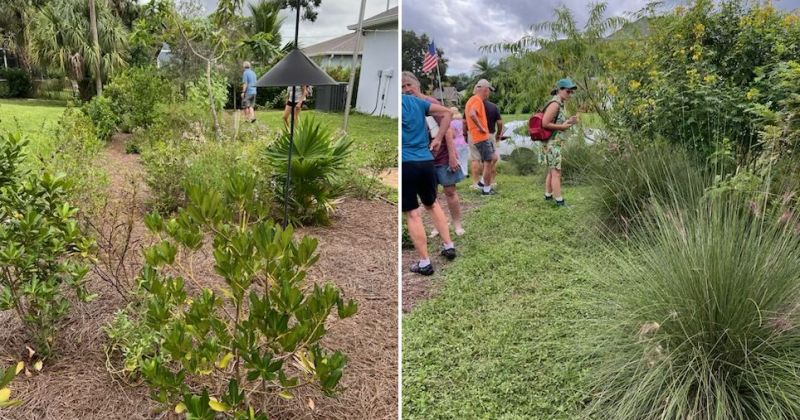
There are easy-flowing paths through the vegetation. Hardscapes, such as the beautiful flagstone pavers, lend elements of texture, color, and contrast. Combined with the neatly laid pine needle mulched areas (see above photos), they both provide wonderful borders for the planted areas.
The use of groundcovers is practical. The Browers have chosen native plants that can withstand intermittent foot traffic and periodic mowing if necessary. Frogfruit (Phyla nodiflora) and river sage (Salvia misella) offer varied foliage and flowers.
Noteworthy is how the native shrubs have been planted on the perimeter of the property. Rather than just place all the plants in a straight line, they have been horizontally “layered” to provide more visual depth. Plus, the mix of varying types of plants will provide a much more pleasing barrier in height and texture rather than that given from a single species straight line hedge. The Simpson’s stopper (Myrcianthes fragrans) and myrsine (Myrsine cubana) produce fruit coveted by small mammals and birds.
The native perimeter screen gets splashes of color from the bright yellow flowers of the privet senna (Senna ligustrina), the pink plumes of mulhy grass (Muhlenbergia capillaris), and the most popular pollinator plant, the tea bush (Melochia tomentosa).
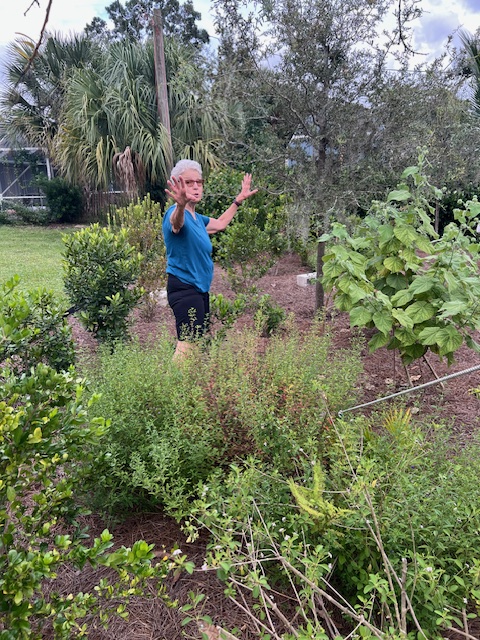
Much thanks to Patty (pictured below) and Scott for stepping up and sharing their wonderful native plant yard. We hope we will be able to have a return visit in a couple of years to see how well their plans have grown into a great native plant habitat.
 ircnativeplants.org