
With the summer yard tours ending in September, Eugenia Chapter’s October 16, 2025 meeting was scheduled to be back at the Environmental Learning Center. I, and many other people, were looking forward to hearing Emily Marois, Palm Beach County Extension Agent, speak about Florida’s native bromeliads. Alas, Emily had to cancel, so we needed a last minute fill-in. However, we hope to be able to get Emily back after the new year.
Since I frequently visit Captain Forster’s Preserve I thought I had enough pictures and experiences to share such that I could put together a presentation for our chapter meeting. My goal was to try to emphasize the beauty and diversity of the flora and fauna that exist in the preserve.
I hoped to make the presentation interesting and entertaining so that people would want to go visit the preserve for themselves. Nature walks, even to the same place, vary throughout the seasons and even during the times of the day. Each species of animal has a regular foraging time; many follow the same paths in the landscape. Flower blossoms open at specific times, based on the light, throughout the day or night. You may pass a plant at 9:00 am that has no flowers open, and then when you go by again at noon, it may be in full bloom. Insect activity greatly increases above 50° F, and the insects need to wait for specific flowers to open before they can forage for nectar.

As you begin the walk eastbound on the trail in the damp, open area with more light, white crownbeard (Verbesina virginica) will catch your eye with its big bunches of white flowers and those distinctive “winged” stems. Pollinators of all kinds utilize the flowers. Be still and see how many different species of insects visit the flowers. Pictured here is a metallic sweat bee.
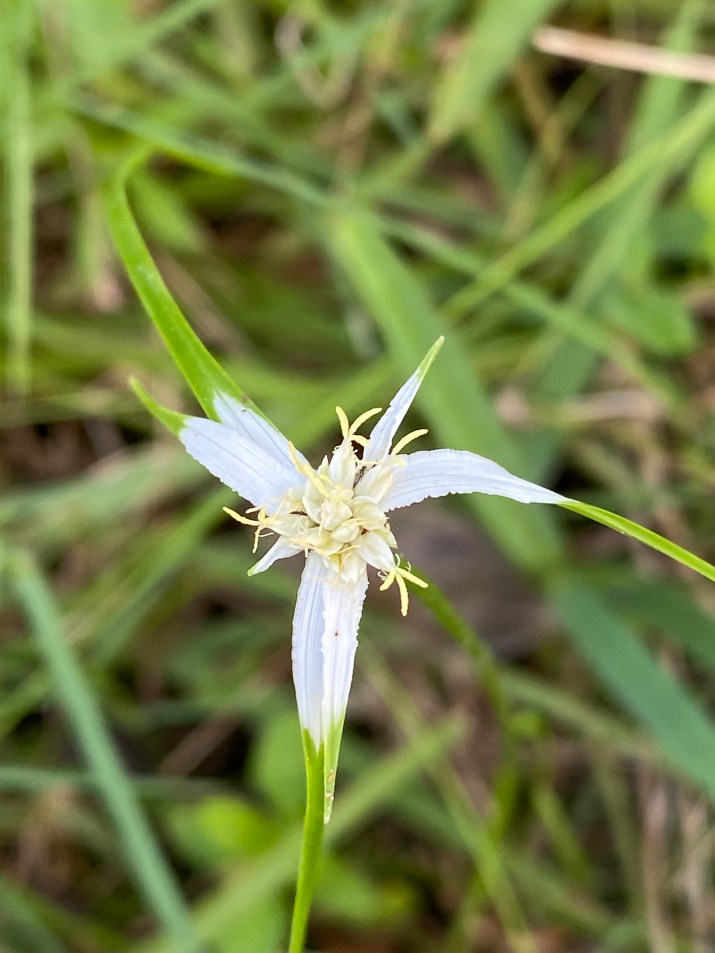
Looking downward, you will see colonies of the delicate, starrush whitetop (Rhynchospora colorata). Here is a rhyme to help you identify some of the grass-like plants you may encounter on nature walks:
Sedges have edges,
rushes are round,
grasses are hollow,
what have you found?
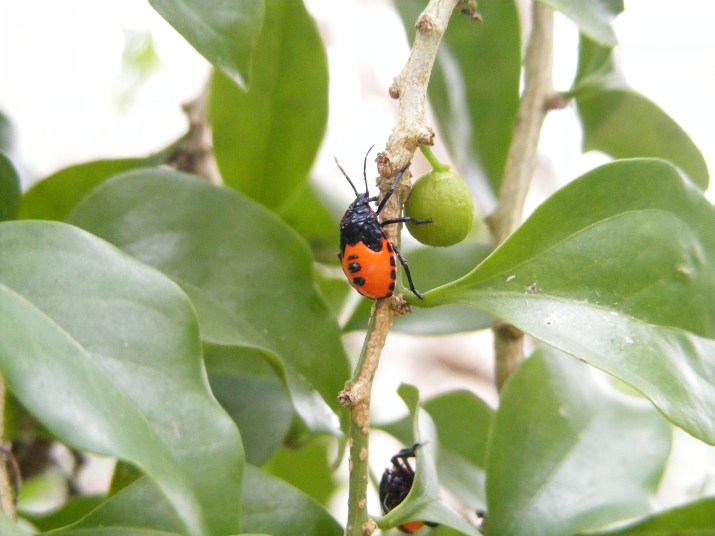
CFP is the only place in IRC I have seen graytwig (Schoepfia schreberi). You can see this beautiful understory tree along the main trail just as it makes its rise up the ancient dune ridge line running through this maritime hammock habitat. The biggest tree will be on your right. You will know you’re looking at the correct tree when you see these shiny black and orange stink bugs (pictured above), probably feeding on the fruit. Click on the link to read about this fascinating parasitic plant.
Thanks to everyone who brought plants for our auction, and to all the eager bidders who made the event fun and interesting.
If you aren’t a member of the Florida Native Plant Society, please consider joining. It is a great way to support the Eugenia Chapter and receive relevant native plant information. As always, please attend our meetings and bring your friends!
 ircnativeplants.org