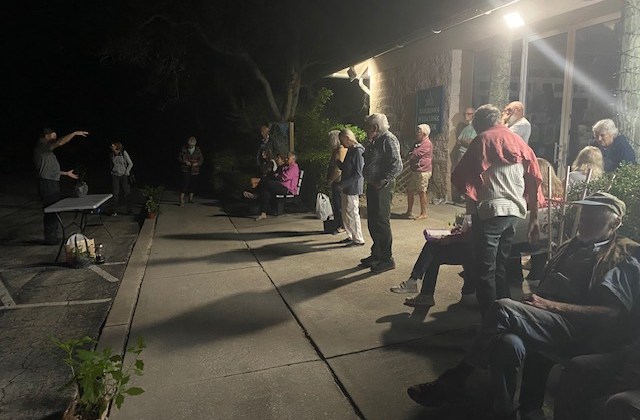

Darkness sets in so early towards the end of the year presenting a challenge for our plant auctions. However, as evidenced by the photo above, native plant enthusiasts still lend their support. Thanks to all the contributors and bidders who made the event fun and worthwhile.
Once the auction ended, we all moved up into the bright and cheery Lagoon Room of the Environmental Learning Center to attend the November 20, 2025 presentation, Nurturing Native Landscapes: Tips and Tricks, given by Skip Healy from Change of Greenery. Skip’s company specializes in Lagoon friendly landscapes and offers consultation, design, installation and maintenance. What better way to hone our native plant landscape maintenance skills than to get the information from a professional that “lives the life” everyday!
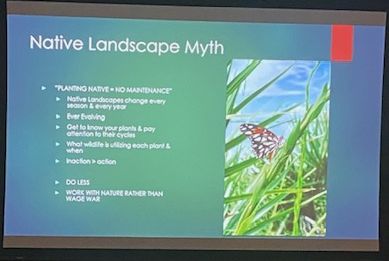
The number one landscape myth is that native landscapes don’t require much work. A native landscape constantly changes throughout each season and every subsequent year. Plants find their own “way”. It is up to you to recognize plant cycles and work out the best way to let them flourish in the landscape to maximize their benefits for you, the plants, and all the wildlife that utilize those plants. As your yard “matures”, and if you’ve put the right plant in the right place, less work will be needed.
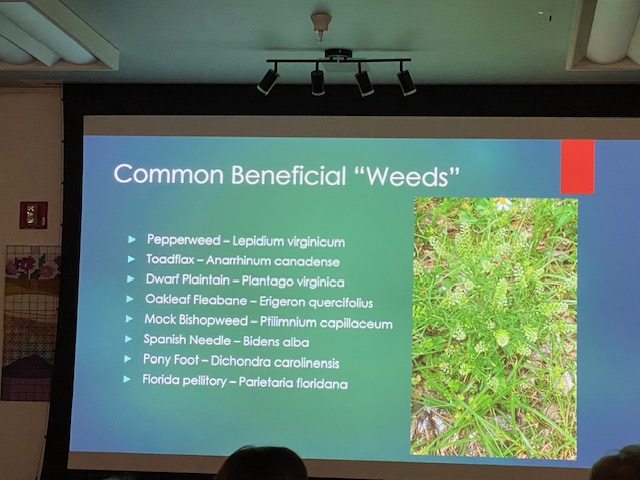
Many weeds may not pose a threat to your native landscape and can provide food for pollinators. The key is not to let them take over.
Invasive weeds are another story though. They need to be dealt with in a very timely fashion. It is important to break their life cycle by not allowing them to get to their reproductive stage. Allowing them to fruit or go to seed will enable them to be spread by the wildlife we are trying to attract. Grassy invasives, such as torpedo grass (Panicum repens), will probably have to be managed with herbicides for complete eradication.
Skip recommends leaving spent flowers and stalks to provide food and shelter for wildlife. Plus, most of us want seeds for subsequent generations. I always feel that a plant is a success in my yard if it reproduces itself. If you have to trim, wait until temperatures are on the incline.
If you have insects eating your native plants, you’ve “done the right thing”! Native plants have adapted to be eaten by our native wildlife and most will recover from being eaten.
A final note of congratulations goes to Lyn Groves, winner of our native plant giveaway, this meeting’s being seaside goldenrod (Solidago sempervirens). Click on the link to read about this versatile native flowering plant.
 ircnativeplants.org