
Our speakers for the January 15, 2026 meeting were the pleasantly engaging team of Brad Fontaine and Adam Klingenberg from Florida Custom Aquatics. Their company specializes in managing and creating natural and artificial aquatic ecosystems. With their educational backgrounds in Fisheries Biology, Aquaculture, and Marine Science they are well equipped to solve problems, create designs, and deliver suggestions and solutions for any water elements that currently exist in your life or those you dream about adding.
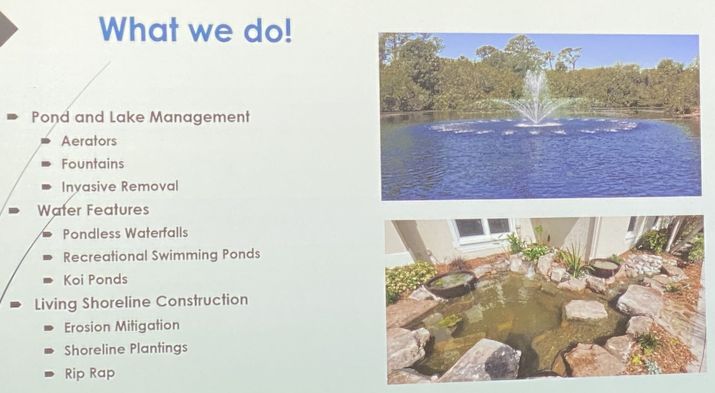
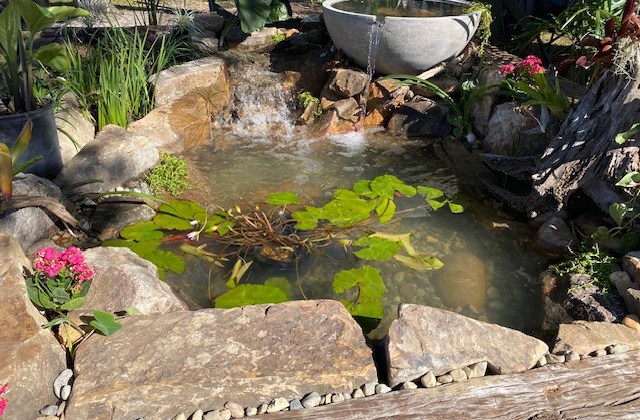
The first portion of their presentation focused on water features that can be constructed in any native plant landscape. The photo above the title is an example FCA used for their booth demonstration at Gardenfest! Their photos showed a variety of completed, eye-catching projects, generating some oohs and aahs from the audience. Water features can be as simple as an overflowing urn or as elaborate as your own stream with cascading waterfalls, rock embankments, and private pools.
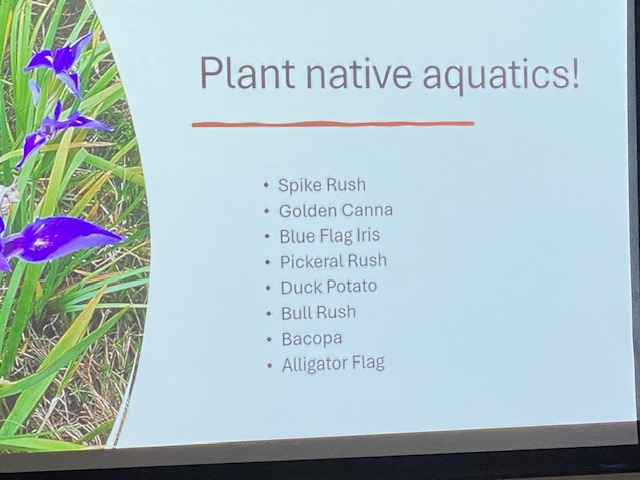
Waterscapes are useful in the landscape to attract wildlife. Small mammals, birds, insects, reptiles and amphibians utilize the water for drinking, bathing, and reproduction. The sound of running water is soothing and pleasant on your property. Planting native aquatic plants adds another, very interesting, dimension, to the native plant palette in your yard.
The second portion of the evening discussed the techniques FCA utilizes for managing aquatic ecosystems such as natural and artificially created lakes and ponds. The information was useful to those of us who have ponds on our property, live in a community with retention ponds, or are in positions where such knowledge will aid in making better informed water management decisions to share with others.
FCA emphasizes sustainable lake management to reduce the use of costly chemicals and mechanical methods of weed control. They promote the use of shallow pond slopes, the utilization of native plants (submerged and emergent), as well as native plant barriers above the waterline. Mixed native plant barriers not only have better visual appeal, they also provide diversity to attract wildlife. The barriers are instrumental for erosion control by slowing runoff, and holding back fertilizer and grass clippings, thus reducing the amount of organic matter running into the water. All of this aids in the oxygenation of the water and promotes a healthy environment for long-term sustainability.
Congratulations to Sheryl Thomson for winning our giveaway native plant of the meeting: black calabash, generously donated by Allan McCarthy. I’m also giving a shout out to all the brave, hardy, supportive attendees who huddled together to participate in the coldest native plant auction we’ve ever had. We had to bid fast to stay warm!
 ircnativeplants.org