
Eugenia Chapter’s May yard tour took place at the home of Carol and Wayne Thomas. It was a good opportunity to observe a fully mature, self-sustaining native plant landscaped yard.
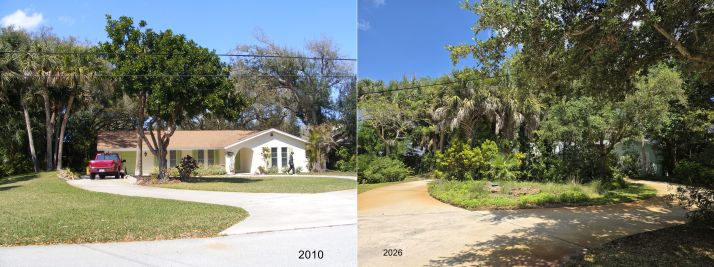
Upon purchasing the house in 2010, the first big projects were the removal of the invasive carrotwood (left center) and planting additional sable palms and 3 more live oaks to help fill in the canopy. Understory plants, such as several species of stoppers and coffees were easy choices to try to bring back the property to more of the original state of a coastal maritime hammock. Since I had an interest in tropical, nonnative bromeliads and palms, many of those also went in, but their numbers are dwindling as my desire to utilize native plants has taken priority.
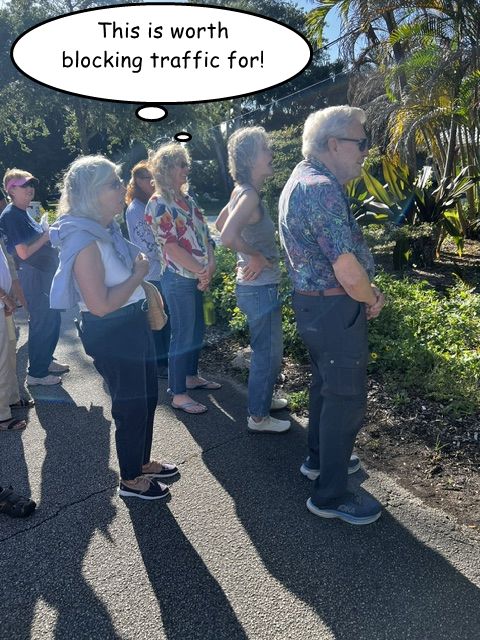
Other than the sable palms and live oaks, the native plants were purchased in 3 gal or less sized containers. Many of the plants currently seen have come up as “volunteers” in the form of seedlings or suckers. The hogplum, Bahamas strongbark, blackbead, and senna, all visible along the road, were grown from seeds that I collected. The St. Augustine turfgrass has been filled in with twinflower or dune sunflower in the majority of the space. Annual-type native plants such as tropical and lyreleaf sage, partridge pea, crownbeard, coreopsis species, blue curl, yellowtop, and senna move themselves around the yard and provide colorful surprises when they bloom again.
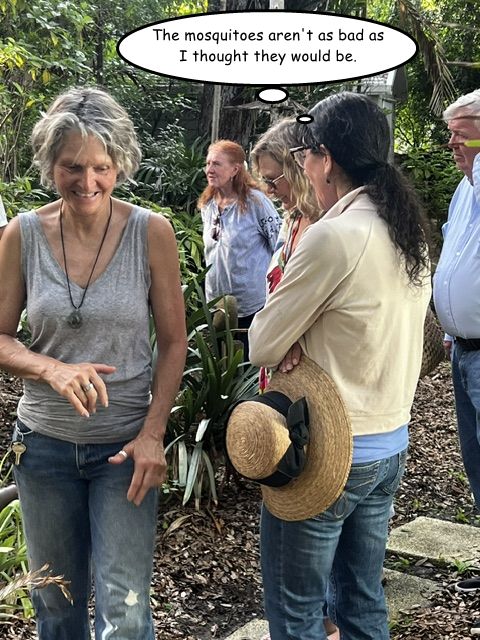
Most of the newest native plant activity has occurred in the backyard with the creation of new pathways through the “jungle”, removal of some tropical ornamentals, and planting new natives such as lancewood, pigeon plum, and Spanish stopper. Colorful rouge plants provide bright spots and food sources and profusely seed themselves.
I’m glad people noticed my wood collection/creations and may have taken home some ideas of their own. I hope to be able to bring some pieces to our native plant auctions.
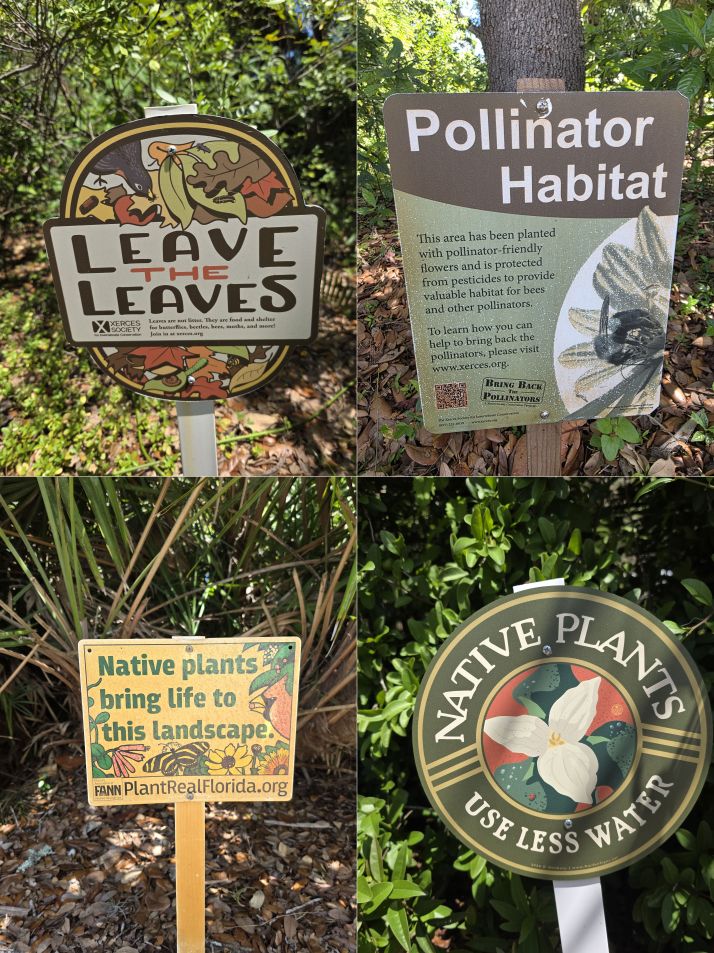
These should have been your take home messages for why we should promote the use of native plants in the landscape. Add some wild to your life – plant native!

